

Background
To ensure the integrity, resilience and reliability of Ireland’s road network, all road bridges are inspected to a planned programme coordinated through the Transport Infrastructure Ireland (TII) EIRSPAN Bridge Management System. Blackglen Overbridge, a 97‑metre‑long, two‑span, post‑tensioned, concrete bridge in south county Dublin, is one such road bridge. Constructed in 2000, the bridge carries the R113 over the M50 motorway, near Junction 13, and connects key residential and commercial centres in the surrounding area.
During a principal inspection of Blackglen Bridge, several structural issues were identified in the upper portion of the central pier. Following a more detailed special inspection, it was determined that the existing reinforced concrete pier supporting the bridge deck required strengthening. This led TII to commission a bridge strengthening works project as part of the Motorway Maintenance and Renewals Contract (MMaRC), with ROD acting as designer for Jons Civil Engineering Ltd, the main contractor for the works.
The works were successfully completed in June 2026, underscoring the value of rigorous inspection, maintenance and proactive crack detection and monitoring and the important role innovative strengthening measures can play in preventing the deterioration of existing structures.
Highlight
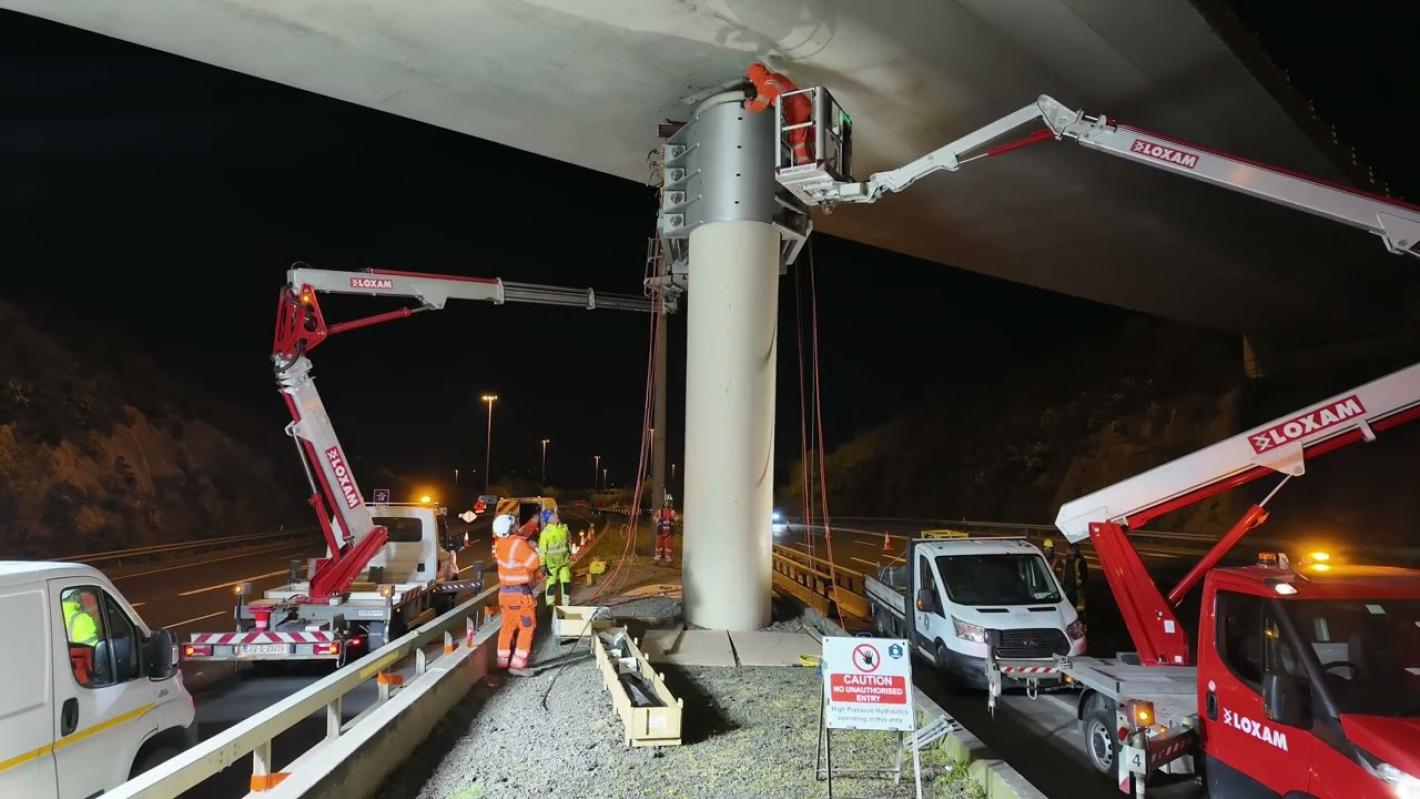
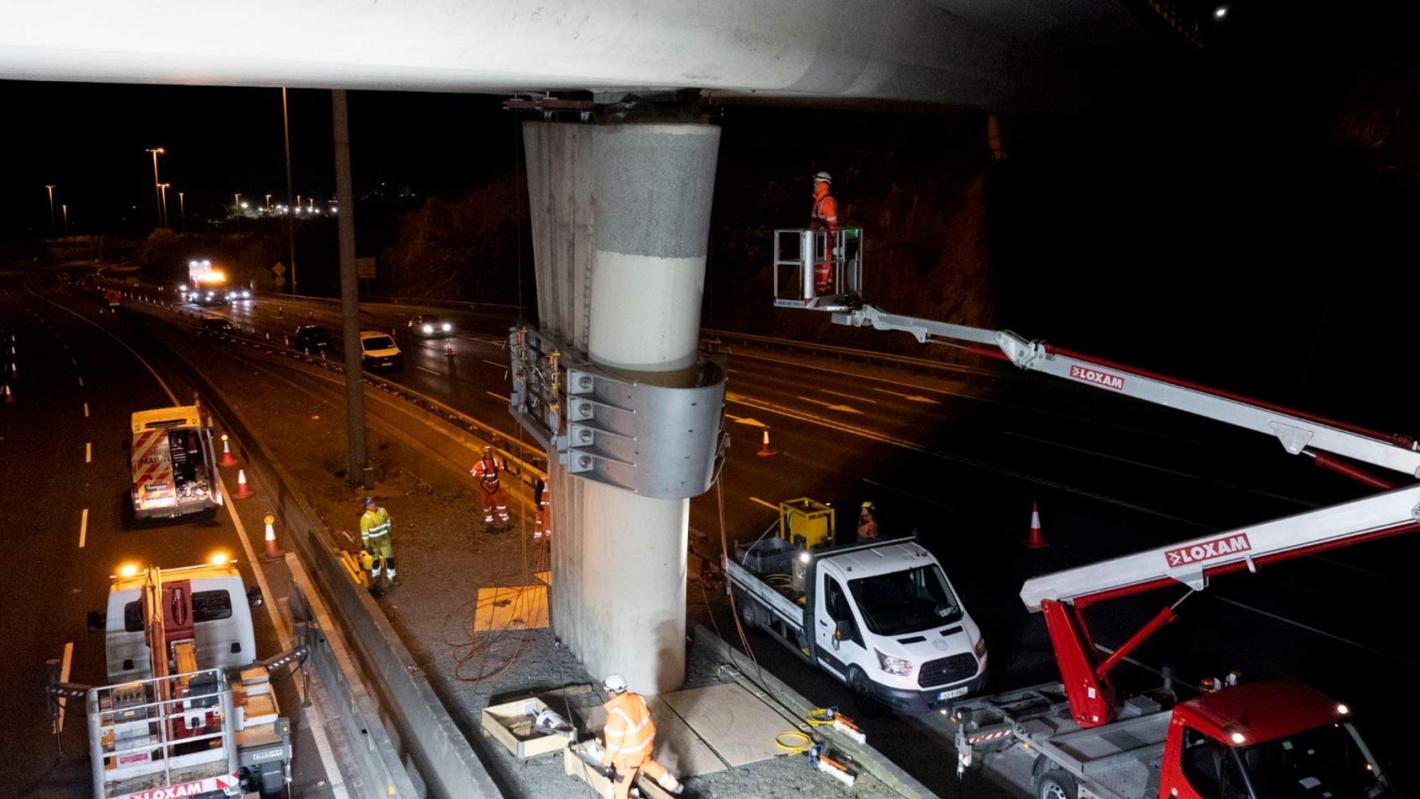
ROD worked closely with TII to explore various active and passive remediation options, and as a result of this positive engagement, an innovative, bespoke, high‑strength, stainless‑steel collar was chosen to provide the necessary pier strengthening.
Solution
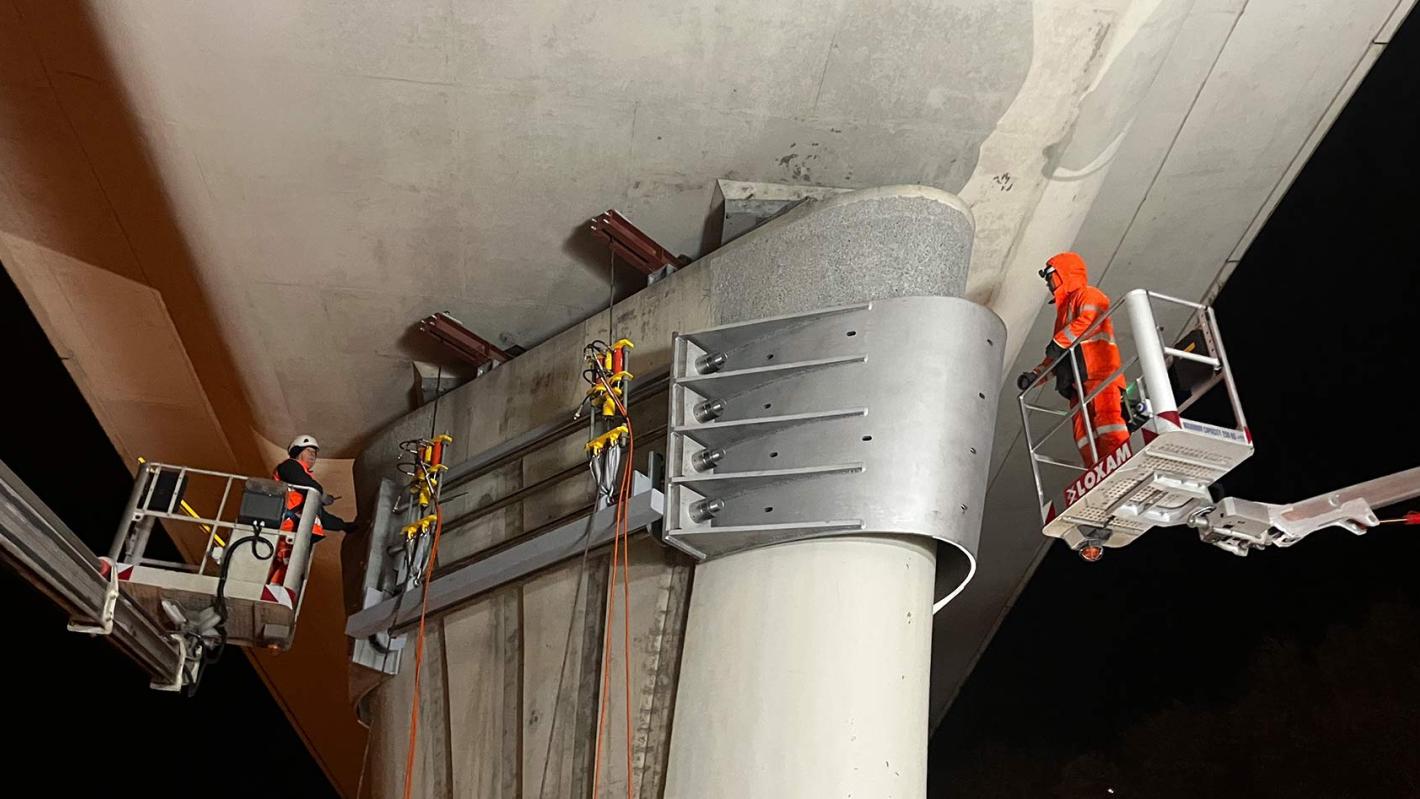
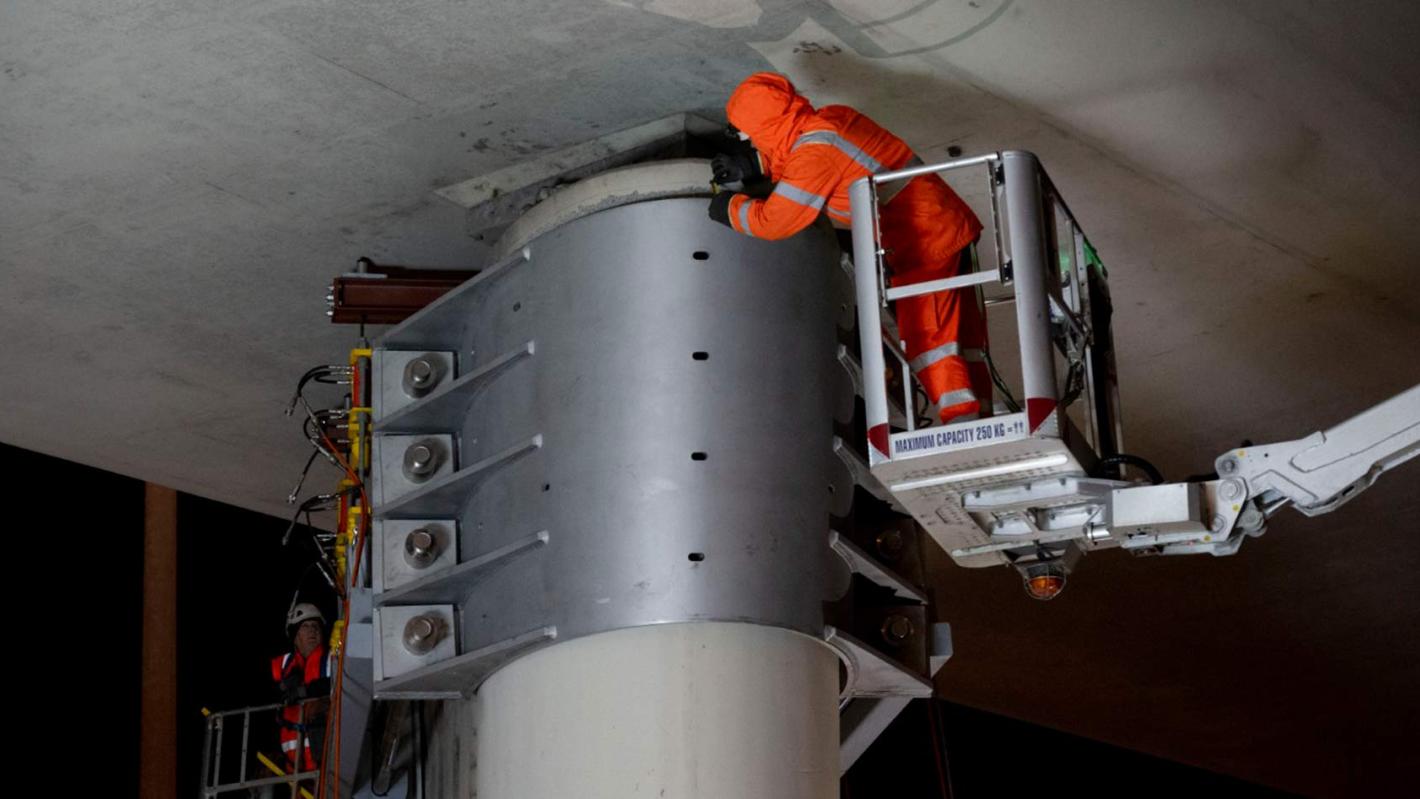
The six-tonne collar system provides controlled prestressing to counteract the horizontal tie forces at the top of the pier head, which had been identified as the root cause of the cracking. The system comprises two 25 mm‑thick collars connected by eight post-tensioned MacAlloy bars, stressed to 55% of their ultimate tensile strength, generating a total force of almost 2,000 tonne.
The use of high-strength stainless steel provided several benefits, including enhanced durability and reduced long‑term maintenance demands. It also eliminated the need for future repainting, a significant advantage given the restricted access to the pier.
Thompson of Carlow undertook the fabrication of the collar, and the prestressing was carried out by PHL Hydraulics.
Services provided:
- Bridge engineering design
- Steel design to EN1993
- Bridge assessment to AM-STR-06026
- Construction supervision