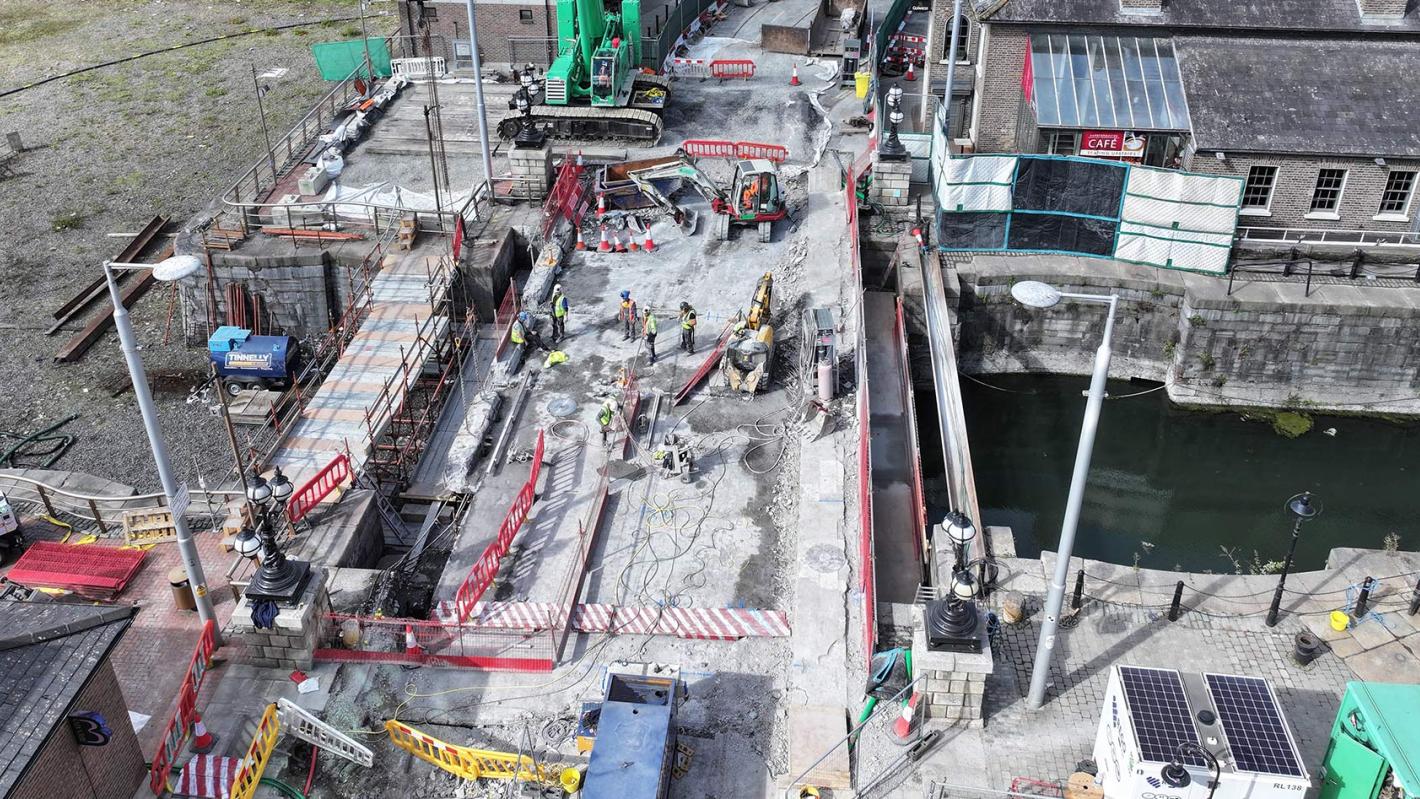
Demolition of the original bridge, which was damaged beyond repair when a fire broke out below deck on 19th August 2025.

Restoring a vital transport link in Dublin’s city centre in just 12 weeks
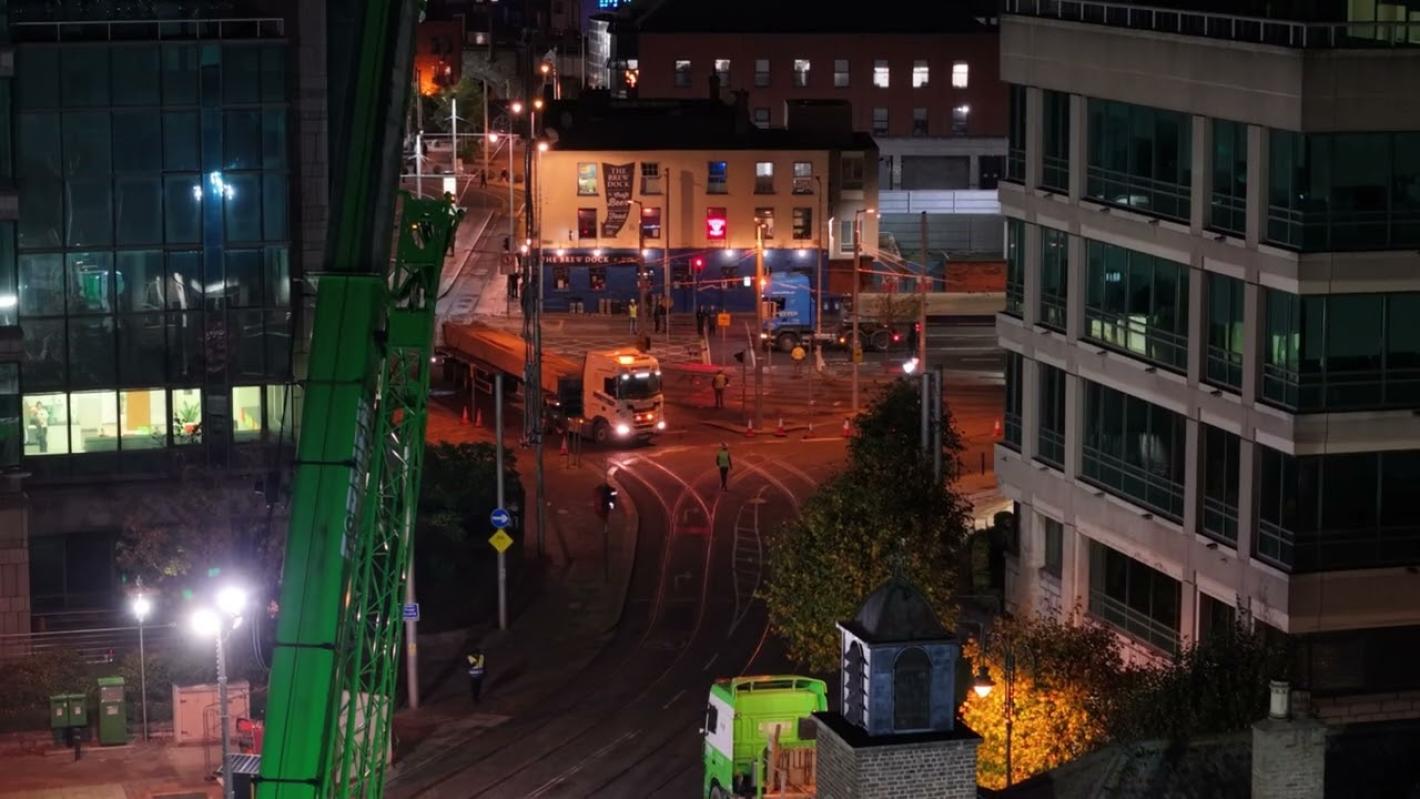
Demolition of the original bridge, which was damaged beyond repair when a fire broke out below deck on 19th August 2025.
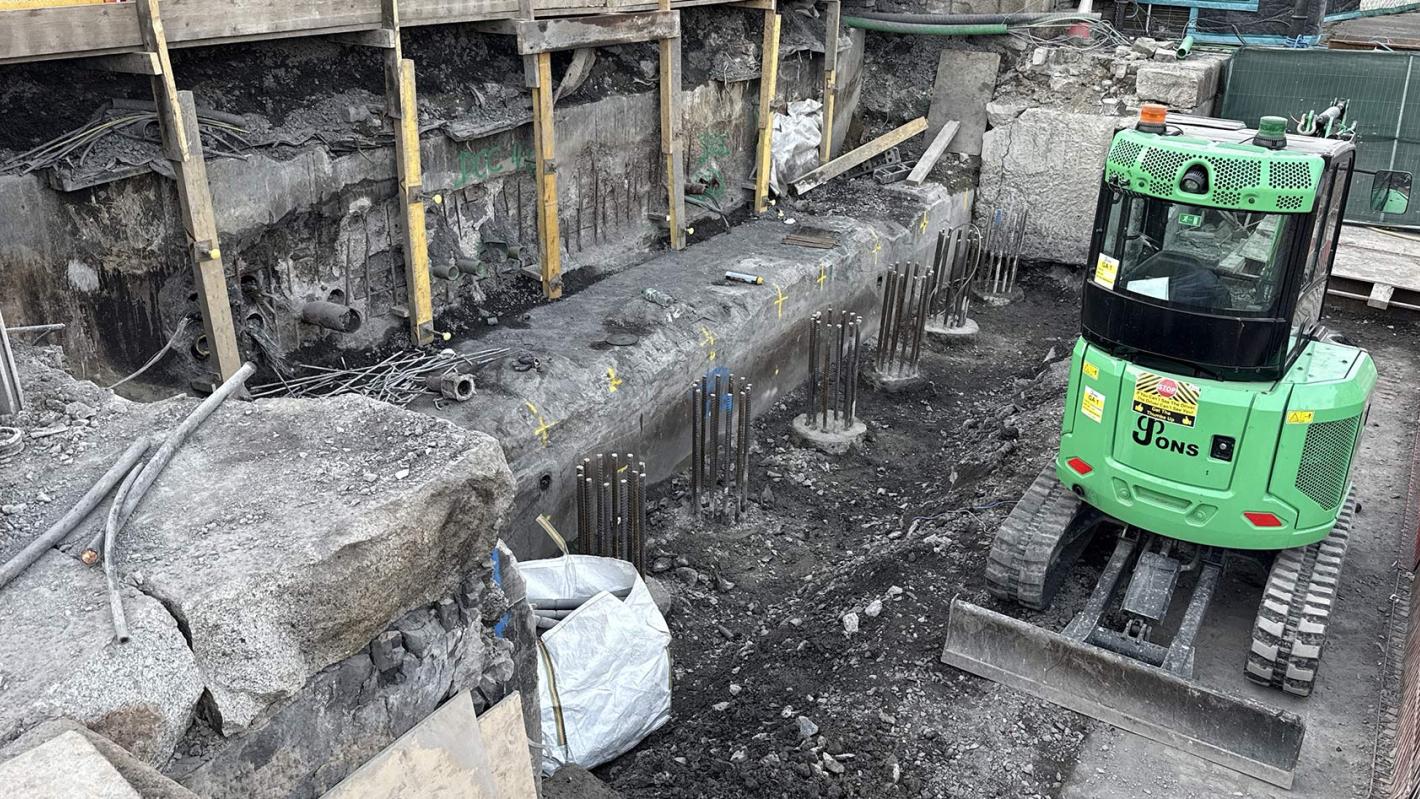
The constrained west abutment site, with new bridge piles in the ground.
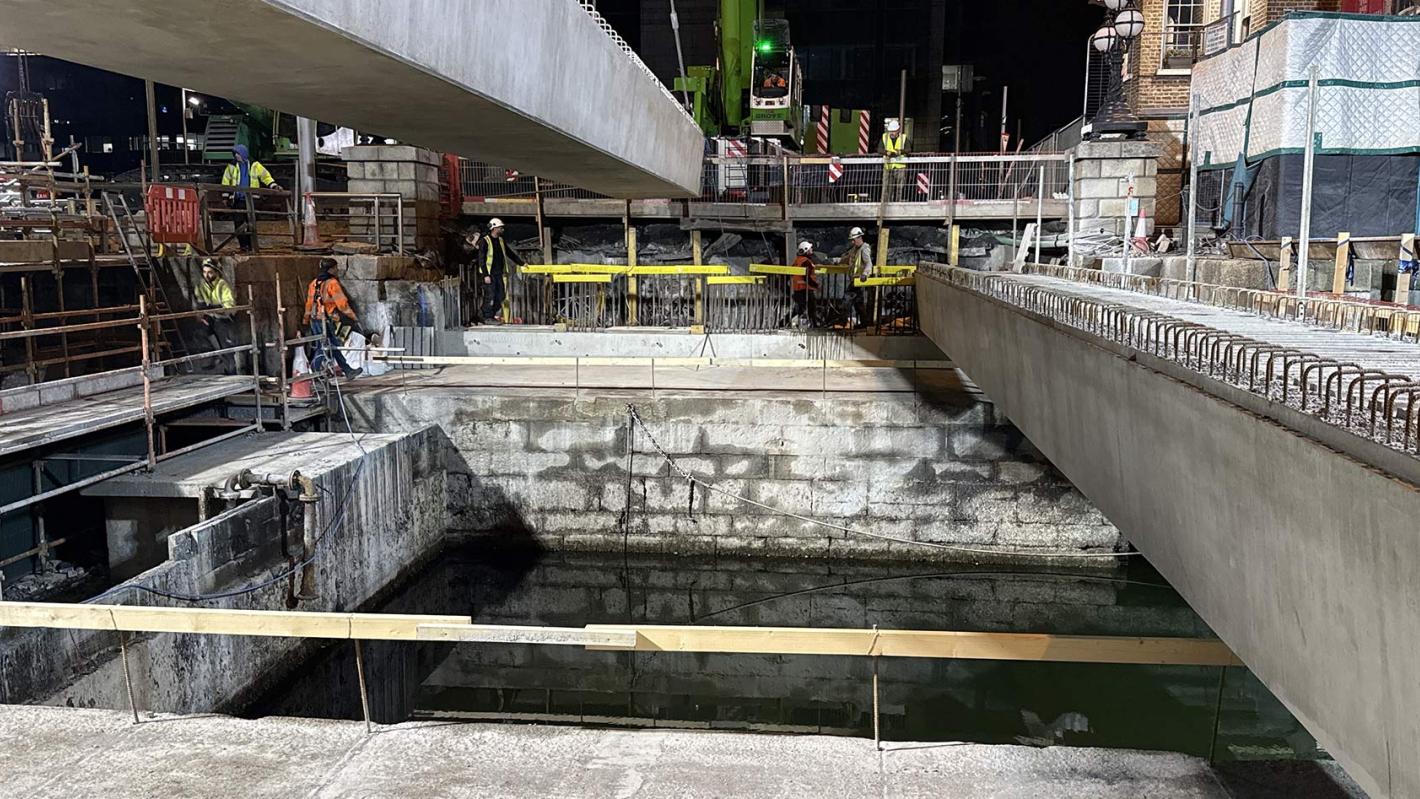
Installation of the precast bridge beams.
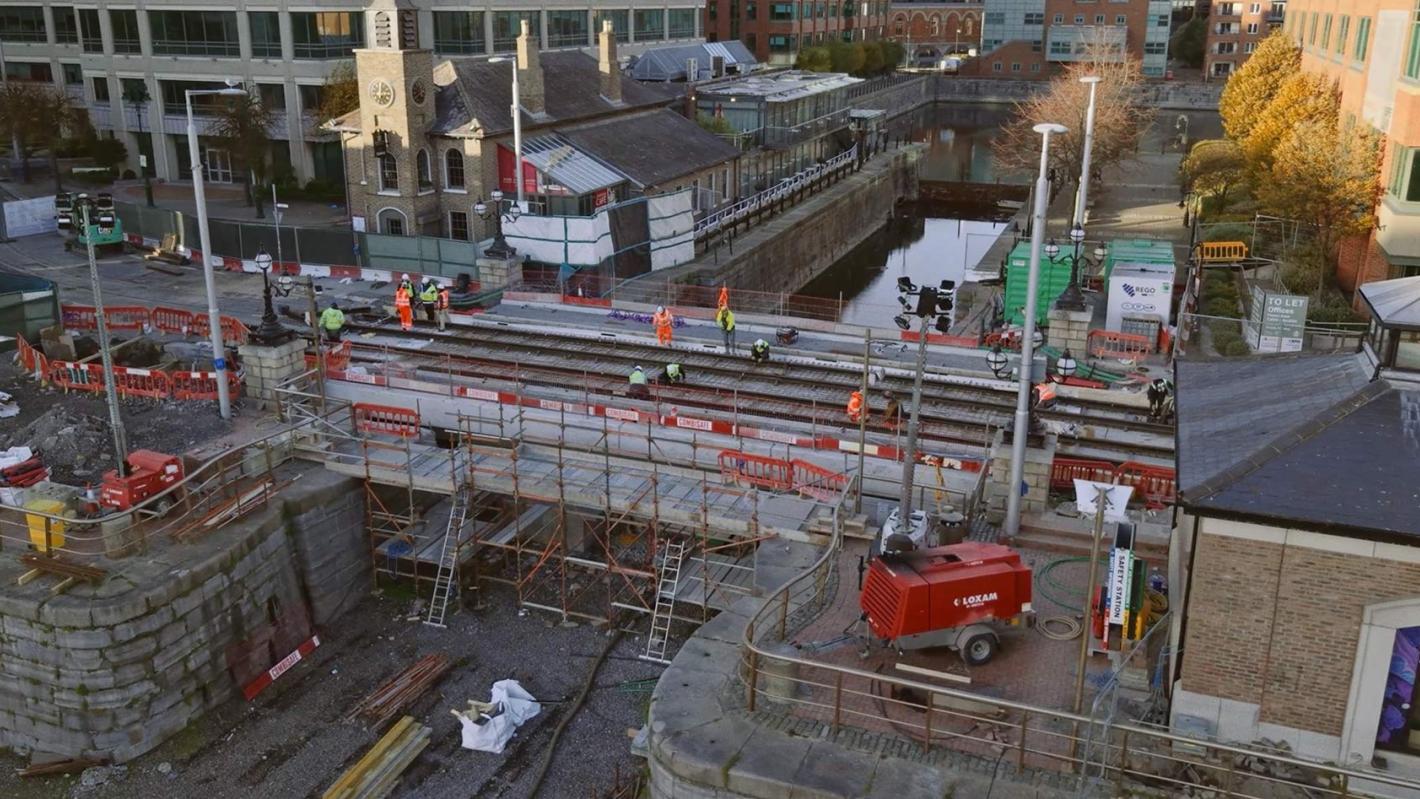
Installation of the track slab.
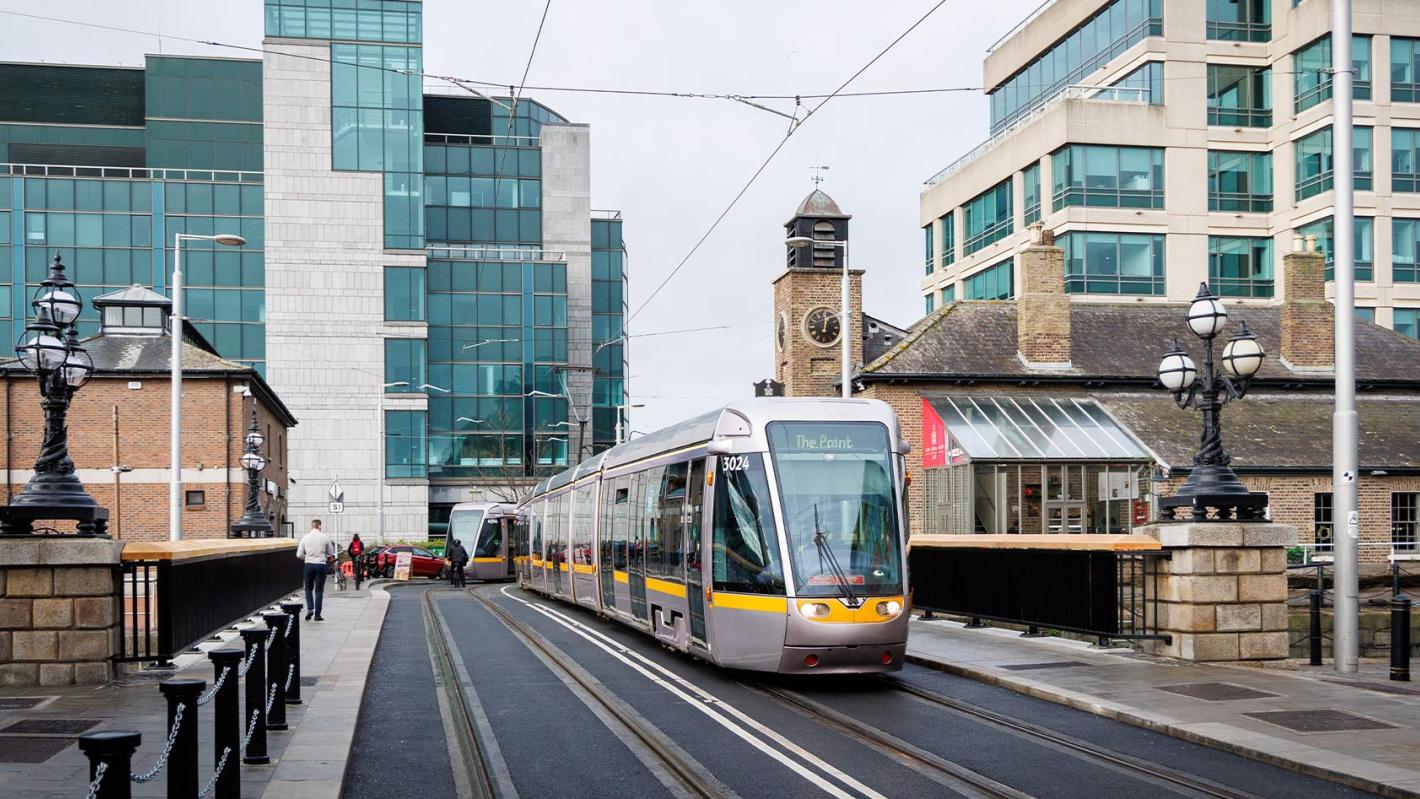
The new George's Dock Bridge in service. Image shows the northern elevation looking towards the River Liffey.
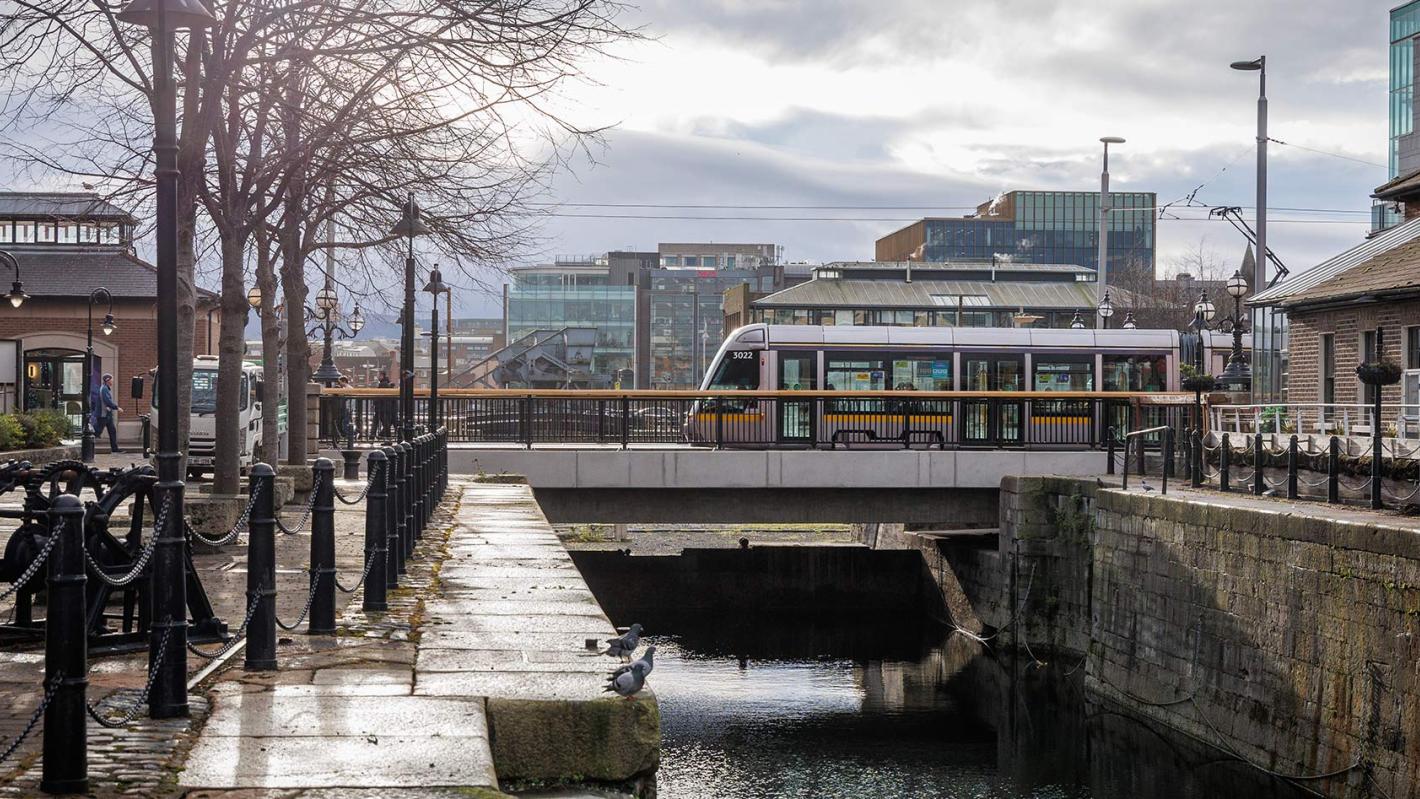
The new bridge in service. Image shows the eastern approach looking towards the Irish Financial Services Centre (IFSC).

On 19th August 2025, George’s Dock Bridge in Dublin’s historic docklands was damaged beyond repair when a fire broke out below deck. Its immediate closure caused significant disruption to pedestrians, cyclists, and road and light rail users in the city centre, impacting residents, businesses and commuters.
In September, Transport Infrastructure Ireland (TII) engaged Jons Civil Engineering Ltd (JCEL) and Roughan & O’Donovan (ROD) on an emergency design-and-build basis to replace this critical piece of infrastructure as soon as practicable. An ambitious 12-week programme of demolition, design and construction followed. On 27th November, a new bridge was opened to the public.
Following discussions with JCEL and Banagher Concrete, a precast W-beam and slab deck, with a clear span of 18.2m and width of 11.6m, was agreed. Unlike the original structure, an articulated steel composite beam and slab bridge, the new bridge is fully integral, eliminating the need for bearings, joints, and abutment galleries.
Given the ground conditions and following investigative probing, we determined that the optimum foundations would incorporate a single row of seven CFA (Continuous Flight Auger) piles - 600mm in diameter and 12m-long -at each abutment, installed between the historic dock walls and the existing infrastructure.
We split the design into packages that were developed, submitted for acceptance and delivered to the contractor ahead of site works. The first design package, piling GA (General Arrangement) and RC (Reinforced Concrete), was programme critical. Whilst JCEL demolished the bridge, our geotechnical team gathered all available ground investigation data to inform the design, with piles installed within 48 hours of submission of the design. The intensity we brought to the design and delivery of the early design packages was maintained through to delivery of the final submission in mid-October.
The George's Dock Bridge carries the Luas Red Line, which accommodates 20,000 journeys on average per day.
The smooth flow of design information and approvals was critical to project success, and the entire project team demonstrated an incredible level of collaboration to achieve this.
For our part, we worked closely with TII’s Technical Approval and Safety Compliance Teams to agree requirements (LUAS loading, fatigue analysis, soil/structure and track slab/structure interaction, hazard matrix), bringing technical reviews to acceptance and issue ‘for construction’.
ROD also provided a full-time supervisor onsite whose daily meetings with the design/site teams ensured the prompt resolution of issues.
Creativity was demanded of the entire project team, not least ROD’s geotechnical experts. With no time to conduct ground investigation, the team sourced extensive historical data from nearby projects which, combined with probing by the piling sub-contractor, validated the use of CFA piles and the extent of the historic dock walls.
As space was limited between the dock walls and existing infrastructure, detailed soil structure interaction and modelling followed to confirm a single row of seven 600mm diameter, 12m-long CFA piles per abutment. This design allowed the piles to be installed without impacting the walls.
George’s Dock is a unique and historic space in Dublin’s Docklands. Its stone walls and water basin are reminders of its engineering and maritime legacy. Respecting the heritage of the site while delivering a critical piece of infrastructure was fundamental to our approach.
Dock walls
Designing piled foundations that would not impact the dock walls presented a significant challenge for our design team. Historic, ornamental lighting columns and their foundations (located at the four corners immediately adjacent to the abutments) added further complexity. Access for reinforcement fixing in diaphragms was restricted, and the transverse bars needed to be installed in beams prior to lifting. To ensure the adjacent infrastructure was protected, we developed a detailed bar installation and beam landing sequence that saw all beams landed in a single shift.
Existing services
The volume of existing services - 55 ducts of various diameter – provided an additional challenge. Over half the ducts were positioned below deck level, between and inside precast beams that required intricate reinforcement detailing. Designing bespoke baffle walls to support service ducts within the beams ensured their position remained fixed during beam installation and prevented clashes with the diaphragm reinforcement. We also undertook multiple surveys to validate
reinforcement detailing and minimise impact beyond the bridge extents.