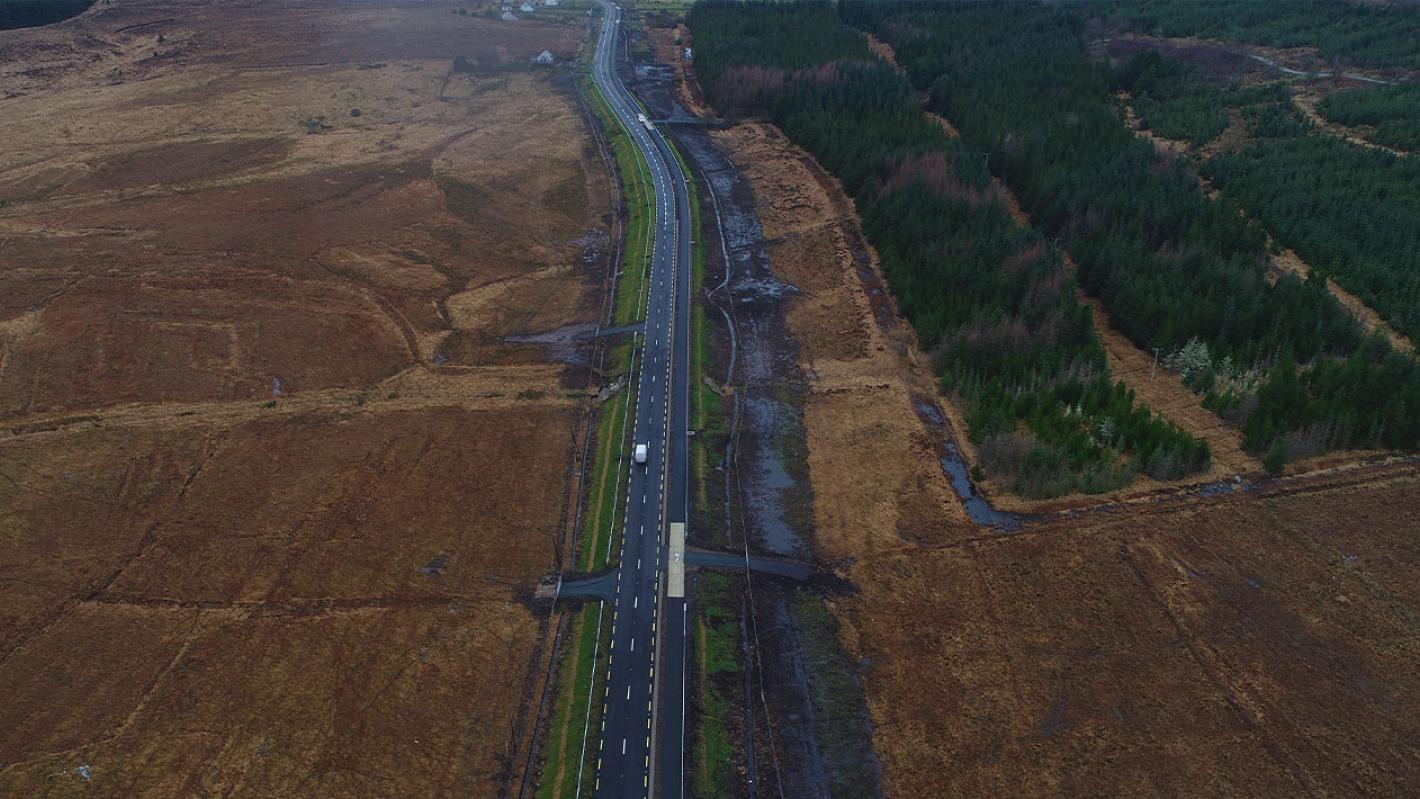
Phase one: Completed works (looking north).

A road development scheme in a sensitive location in Co. Donegal
Phase one: Completed works (looking north).
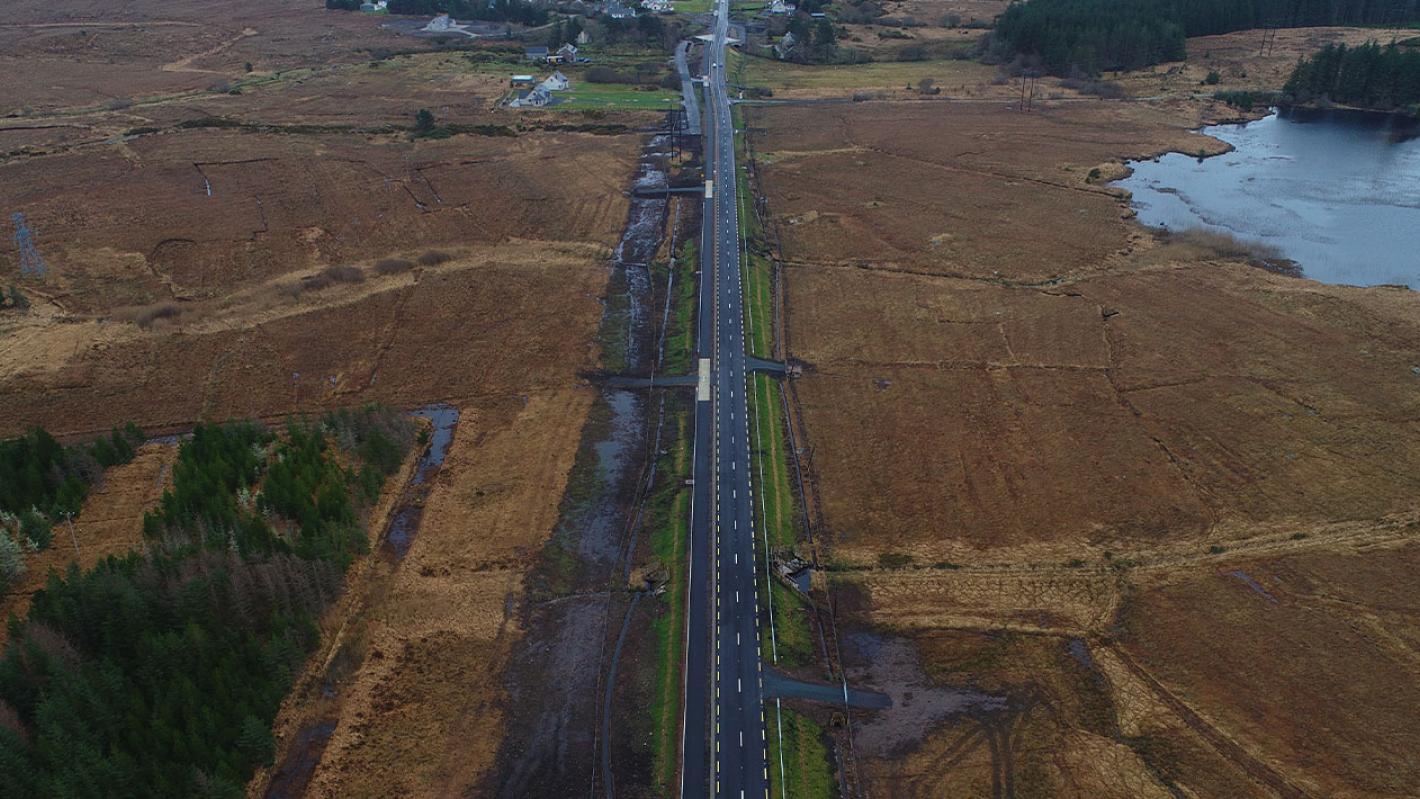
Phase one: Completed works (looking south).
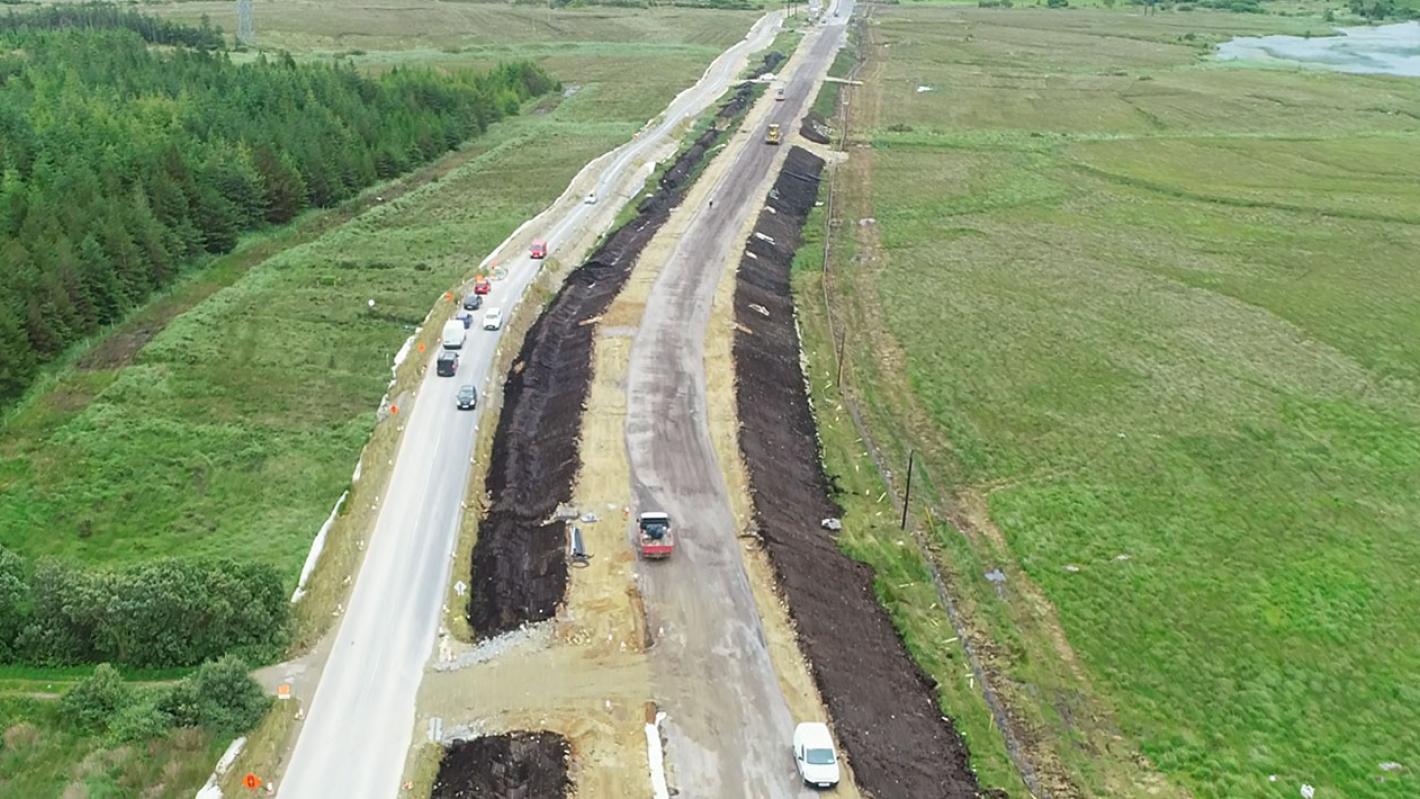
Phase one: Post-surcharge removal, pavement construction works (looking south).

In 2020, Donegal County Council engaged ROD to provide construction and handover stage consulting engineering services for phase one of the N56 Letterilly to Kilraine Road scheme, located just north of Glenties, at the north-west edge of the Blue Stack Mountains.
The scheme comprised 4.1km of Type 3 single carriageway, 2.5m wide cycle track, 0.6km of pavement overlay, realignment of five local side roads and direct accesses, a new arch bridge structure, reinforced soil wing walls and part demolition of Sruhangarve Bridge.
Construction began in early 2021, with Wills Bros Group as the main contractor.
Phase one was completed in late 2022.
In late 2022, ROD-AECOM Alliance was engaged by the council to support the delivery of phase two of the project, which aimed to significantly improve road safety along a 2.6km long section of national secondary road, on the southern outskirts of Glenties town.
Our commission included a due diligence review of the draft tender documents, management of the tender phase and provision of contract administration, site supervision, design support and Project Supervisor Design Process (PSDP) services.
The project was based on a Type 3 single carriageway design and included provision of a combined cycleway/footway facility, repair and strengthening of the N56 road, minor alignment improvements and a new regional road junction layout at the southern end. In addition to improving safety for road users, it enhanced accessibility, boosted economic activity in the northwest region and provided a valuable recreation/tourist amenity for the local area.
Construction began in August 2024, with Fox Building & Engineering Ltd. as the contractor and project supervisor construction stage (PSCS) for the works.
Phase two was completed in late 2025.
The scheme involved construction close to and within the West of Adara/Maas Road Special Area of Conservation (SAC) and the Owenea catchment, where freshwater pearl mussels have been recorded.
To ensure compliance with planning conditions, our environmental team carried out regular site inspections during phases one and two of the scheme. In addition, the phase two scheme design featured minimal earthworks. Instead, a combination of pavement overlay and inlay was used together with safety barrier upgrades and improvements to the existing drainage, footpath and cycle track network.
The office, site and construction staff adopted an open and collaborative approach to the delivery of the project, which resulted in the successful mitigation of environmental restrictions.
In demonstrating how peat excavations can be avoided, the project signalled the potential for developing sustainable geotechnical engineering solutions that reduce greenhouse gas emissions from excavated peat (depending on import material costs and transport needs).
Construction and handover stage consulting engineering services, including Employer’s Representative, site supervision, PSDP and design support services.