
Summary
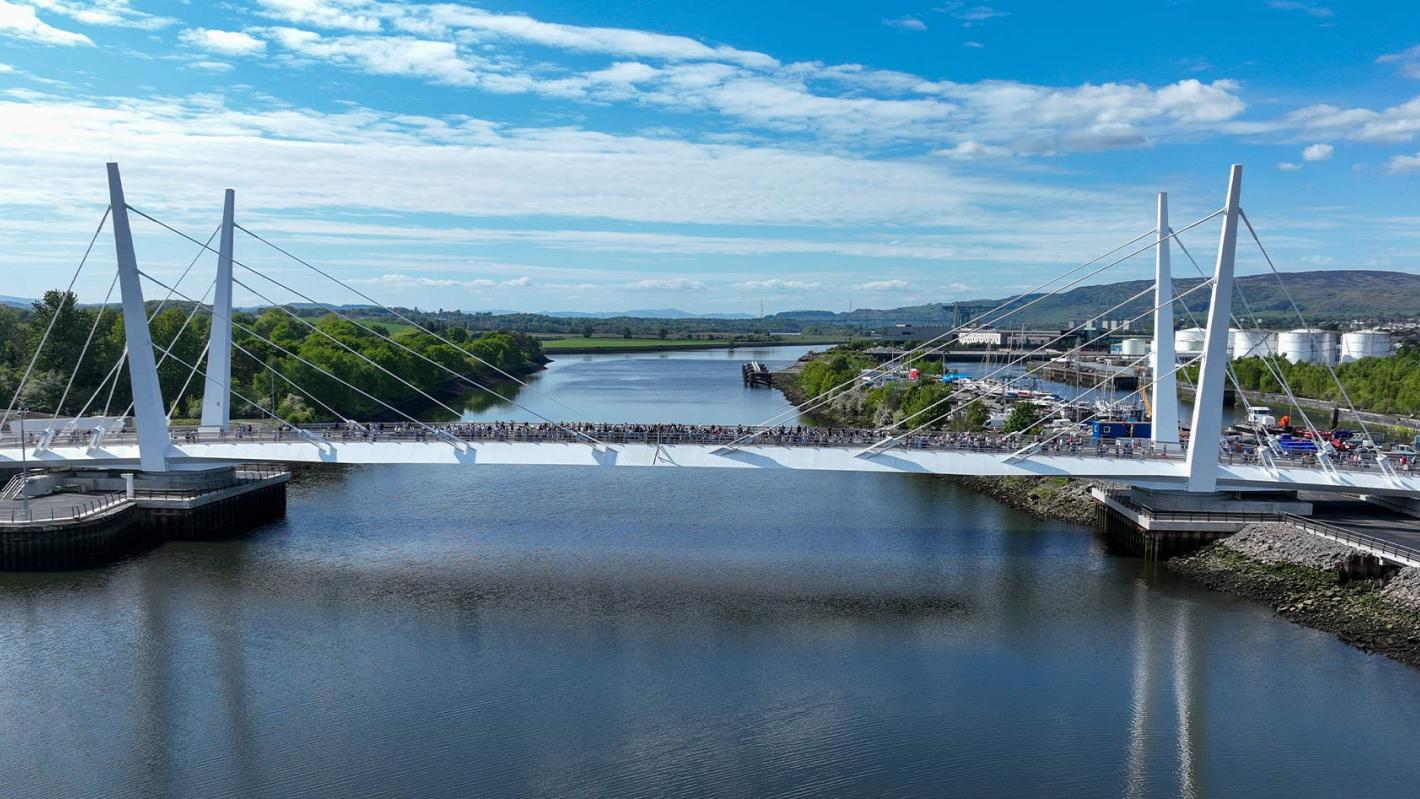
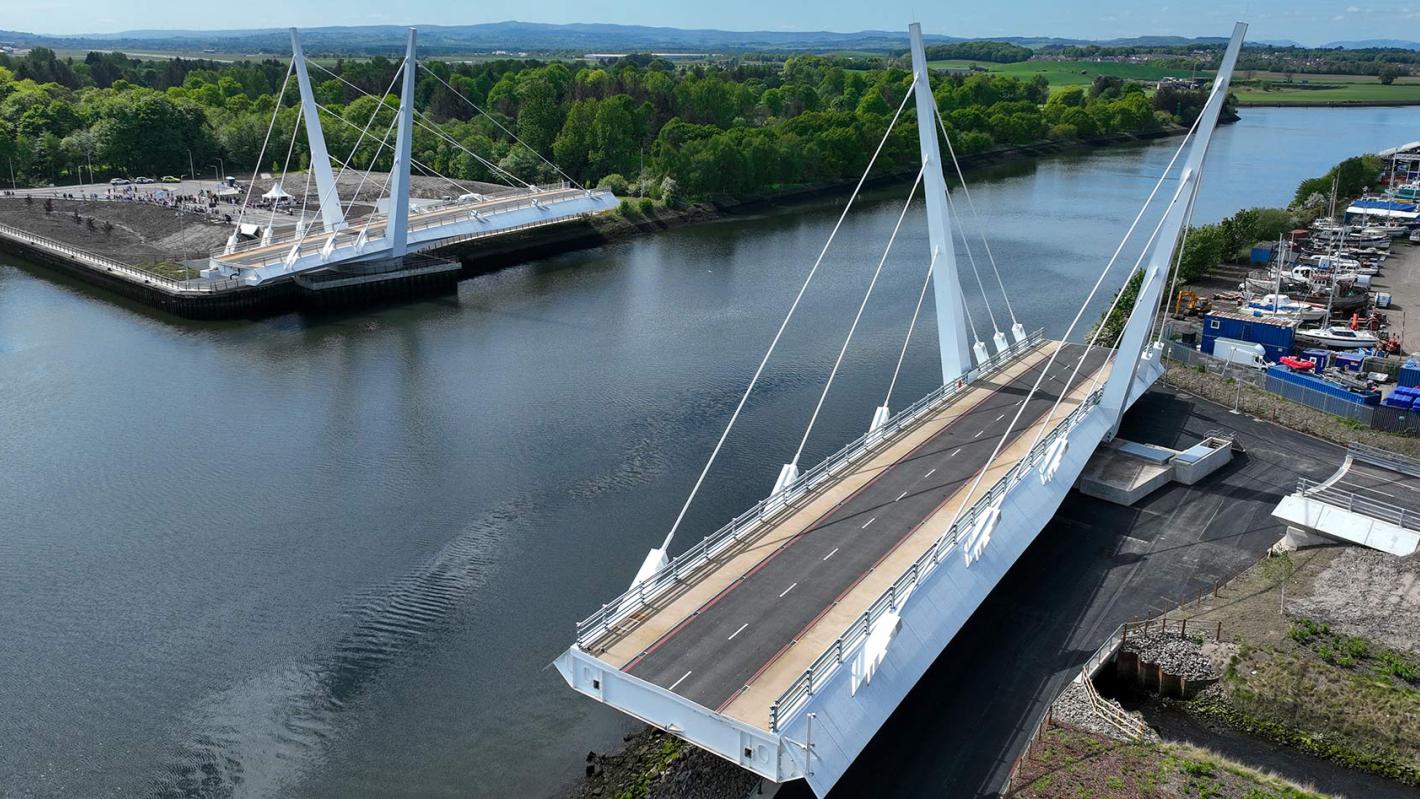
Renfrew Bridge is a 184m, double cable-stayed, swing bridge over the River Clyde in Renfrewshire, Scotland. It is one of the largest bridges of its kind in the world and the first opening road bridge across the River Clyde.
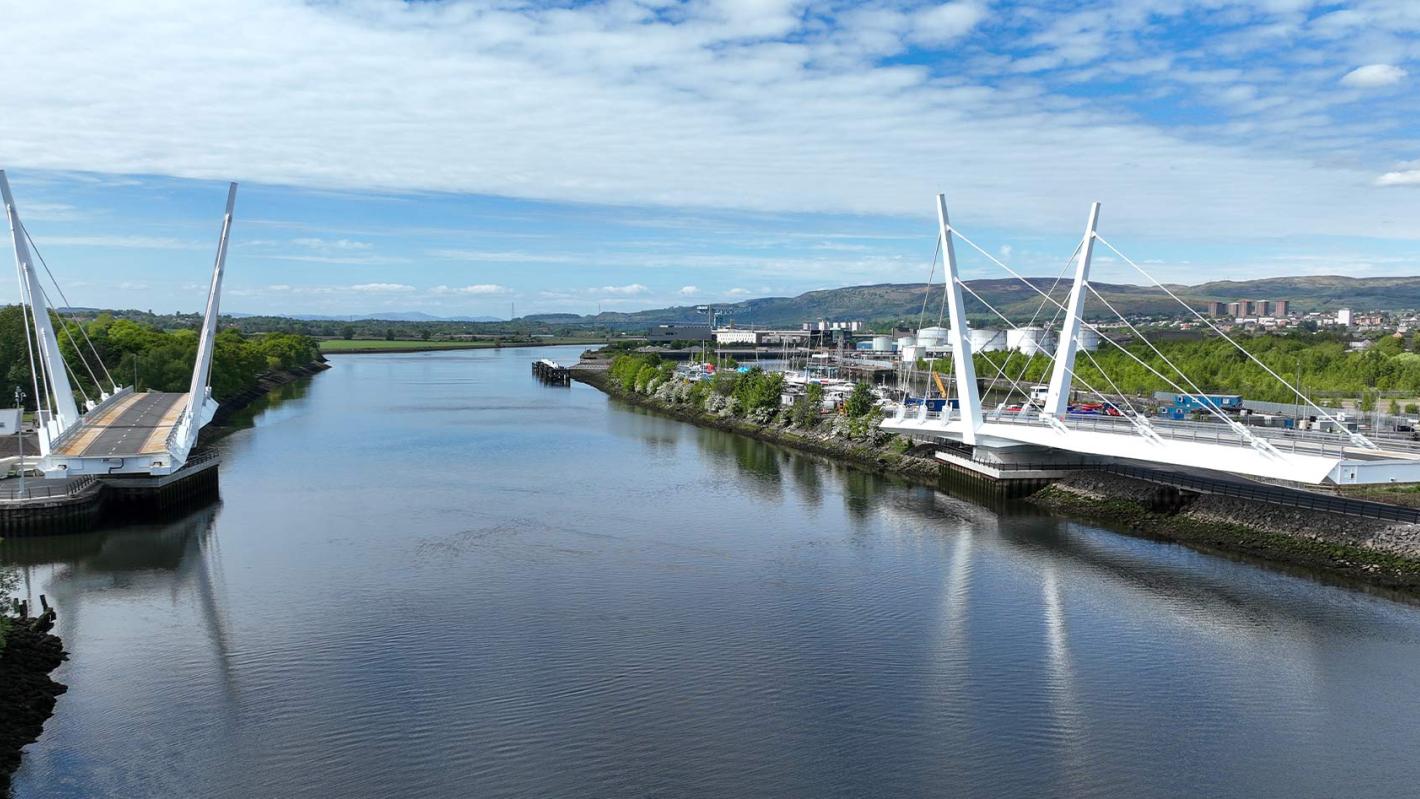
The bridge provides a significant navigational opening for marine traffic through its eye-catching double-swing opening mechanism and spans over the river with a 12.3m wide bridge deck that carries pedestrians, cyclists and vehicles.
As the centrepiece of the £117m Clyde Waterfront and Renfrew Riverside project, the bridge is expected to enhance the local economy, attract investment to the riverside and create thousands of jobs locally.
It was officially opened on 8 May 2025.
Awards
Road Bridge Project of the Year
New Civil Engineer (NCE) Bridges Awards 2026
Details of our commission
ROD collaborated with design lead H&H to provide comprehensive movable bridge engineering design services for Renfrew Bridge. The design-build project was led by construction and civil engineering company, GRAHAM, with Hollandia Infra, lemants, Ramboll, Amey, Hycom Engineering, and Fairfield Control Systems among the other members of the project team.
Hollandia–Iemants were responsible for the design, fabrication, erection and commissioning of both cable-stayed, swing superstructures. H&H-ROD were Hollandia Infra and lemants joint venture designers.
Approach
The H&H-ROD team used an integrated design approach, with structural, mechanical, and electrical systems functioning as one and bridge geometry and systems matched to optimise functionality and long-term durability and reliability.
A critical success factor for the bridge was the control of deformations of the moveable swing bridge and a reliable joint interface between the double leaf spans.
In addition to the technical details of the completed in-service and operational design, a full understanding of the contractor’s fabrication, construction, transportation and erection methodologies was required by the project team. ROD-H&H worked closely with the contractor to develop their construction methodology.
Stage-by-stage geometric control procedures were implemented when stressing cable stays to fine-tune cable forces to precisely control deformation at the mid-joint interface of the two spans.
Each span is 92m long, making it one of the world’s largest double-leaf, bobtail swing bridges.
Solution
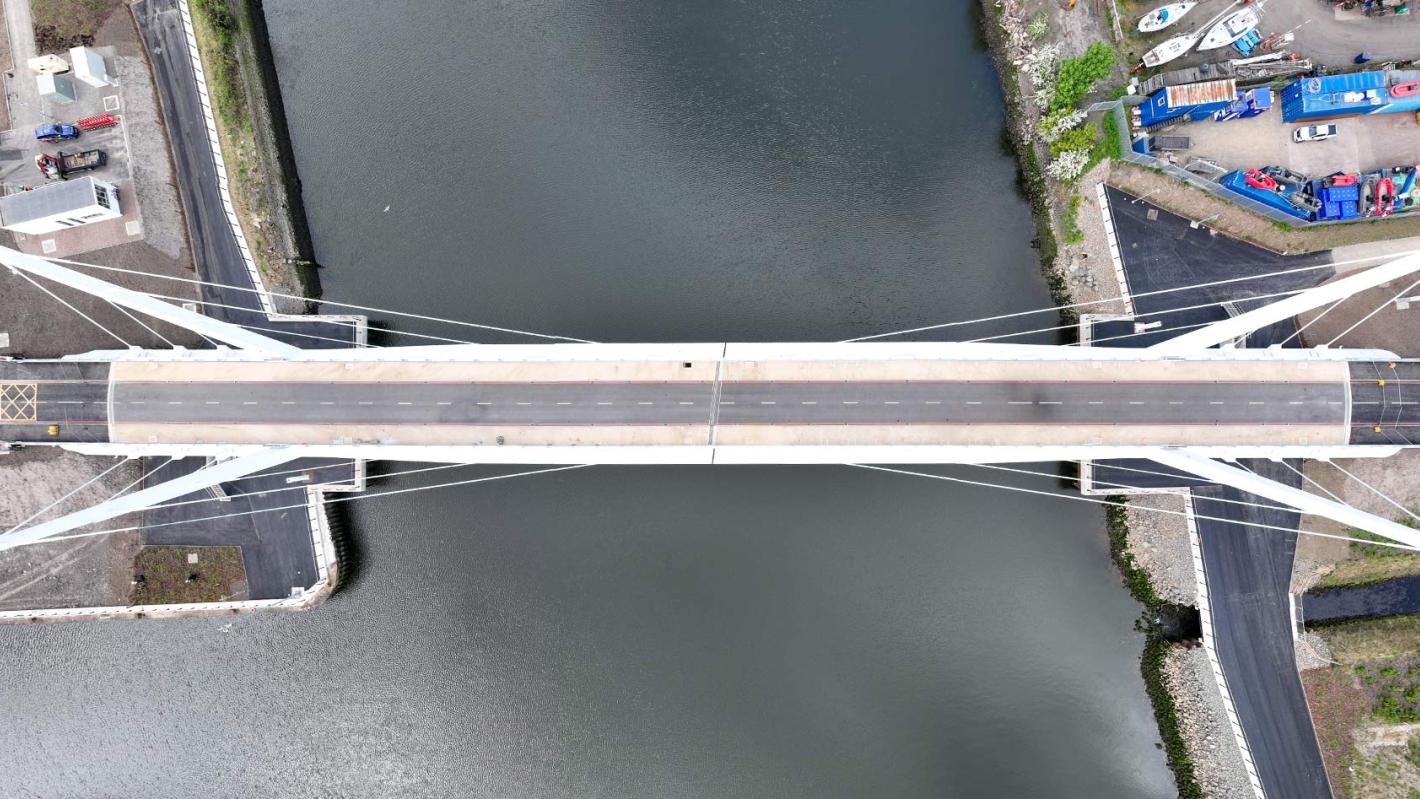
The geometry of this elegant and structurally efficient swing bridge allows for cyclist and pedestrian-friendly gradients on the bridge while providing a significant navigational opening. The 12.3m wide bridge deck contains two carriageways and two pedestrian footpaths.
The double swing bridge is 130m pivot to pivot, with an asymmetric or “bobtail” arrangement of 65m forward span and 27m back span. The pivots feature 6.7m-diameter slewing bearings. The steel superstructures spans are gear-driven, hydraulically powered, and open at a 110° angle. The forward steel superstructure is supported by cable-stays anchored to steel pylons and a counterweighted back span.
Sustainability
The design presented unique engineering challenges, which our team overcame through innovation and value engineering. By reconfiguring the deck section and optimising the stay-cable configuration, we delivered an efficient structure and achieved a 35% carbon reduction.
The project creates an attractive waterfront area and provides communities in Renfrew, Clydebank, Yoker and the wider city region with better connections to their places of work, local hospitals, education centres and leisure opportunities. New pedestrian and cycling routes through Renfrew and across the bridge connect to Yoker train station and the national cycling network.
The new bridge and road will reduce congestion in Renfrew town centre, shorten journey times and improve journey reliability.
Challenges
The design of movable structures is always a challenge in itself, particularly when looking at a joint between two movable parts. The design was optimised to ensure a light superstructure with the innate flexibility of a cable-stay bridge. The processes of geometry control were thoroughly developed, including allowances for possible cable adjustments on site to ensure continuity between the two spans.
The two spans were built by two different steel fabricators. While they may seem symmetric, there are differences in weights and construction sequence which made close coordination between all parties crucial.
Wind studies of the deck and pylon were performed. Wind tunnel tests were complemented by CFD analysis, which led to the installation of deck fascia plates with a variable section along the bridge.
Services provided:
Bridge engineering design